Yachts For Sale
Yacht for sale
Yachts For Sale
Content
The Making of HEED: An Exclusive Journey Behind the Scenes of a 53-Metre Superyacht
A Rare Invitation Behind the Scenes of Superyacht Delivery
The series began when SeaNet SuperYachts invited David Seal and the Yachts For Sale Blog team to Italy to document the delivery of its latest 53-metre project.
Rather than filming a finished yacht in carefully prepared conditions, the team arrived to find shipyard workers, engineers and crew members still completing an extensive list of tasks before departure.
The yacht had been constructed at Rossinavi's facility in Pisa, but a damaged lifting bridge on the canal had delayed access to open water and postponed sea trials by more than a month.
By the time filming began, the deadline was fixed: the yacht would depart Viareggio for Malta at 4 p.m. on 30 May.
The cameras captured the reality of the handover, from last-minute technical checks and safety drills to the loading of equipment, provisions and personal belongings. Some crew members worked late into the night before preparing for their first passage together.
The episode offered a perspective rarely seen in conventional yacht films, showing that formal delivery is only one stage in the process of preparing a newly built superyacht for service.
The Maiden Voyage From Viareggio to Malta
Once the final checks were completed, HEED departed under her own power for the approximately 39-hour passage to Malta.
The journey marked the transition from construction to operation. Although the yacht had been formally accepted from the shipyard, the crew still faced the considerable task of organising equipment, familiarising themselves with onboard systems and preparing the vessel for her first guests.
The programme also documented the importance of technical acceptance. SeaNet had insisted that essential mechanical and navigational issues be resolved before delivery, while certain minor cosmetic items could be addressed later under warranty.
The departure was therefore more than a ceremonial moment. It represented the result of months of preparation by the shipyard, management team and crew, and provided the starting point for exploring the wider story behind the yacht.
Understanding the SeaNet Co-Ownership Model
During the voyage, the second episode shifted attention from the yacht itself to the ownership structure that would shape her future.
In a conversation with SeaNet founder Matty Zadnikar, David explored how the company had developed its co-ownership programme and why some owners who could afford to purchase a yacht outright were choosing to share ownership instead.
The model allows participants to acquire a proportion of a yacht, with usage periods and operating expenses allocated according to the agreed ownership structure.
Zadnikar explained that a one-third share can provide a particularly attractive balance between access, flexibility and financial efficiency for certain owners.
The discussion also examined the importance of compatibility between co-owners, transparent financial arrangements and clear rules governing the allocation of time on board.
What emerged was a picture of co-ownership as a carefully managed legal and operational arrangement, rather than simply a way of dividing the purchase price of a superyacht.
The People and Systems Behind Yacht Management
The second episode also provided an opportunity to examine how SeaNet's business had evolved beyond shared ownership.
Operating a fleet of large yachts requires dedicated departments responsible for technical management, recruitment, hospitality, maintenance, financial administration and crew development.
The team explored the company's approach to selecting crew, providing ongoing training and creating opportunities for professional progression.
Particular attention was given to the standards maintained across SeaNet's yachts and the importance of ensuring that owners receive a consistent experience, regardless of which vessel they are using.
These conversations established an important theme that would return in the final episode: a superyacht's quality depends not only on its design and construction, but also on the people and organisation responsible for operating it.
The 44-Month Project That Began With a Blank Sheet of Paper
The third episode returned to the beginning of HEED's development, revealing that the 44-month programme included far more than construction.
Approximately eight months were spent defining the owner's requirements, developing the specification, comparing shipyards and negotiating the contract before building work began.
The owner had previously operated a 35-metre Azimut Grande but wanted to move into the fully custom market with a yacht designed around his family's preferences.
Rather than starting with a particular exterior design, SeaNet examined how the yacht would be used, including cruising destinations, entertaining, wellness, cuisine and everyday life on board.
The captain, engineers, chief stewardess and chef were involved in developing the specification, ensuring that practical operational requirements were considered alongside the owner's personal preferences.
SeaNet approached three shipyards before selecting Rossinavi. The objective was to find the right combination of construction quality, technical capability, price and delivery schedule.
According to Zadnikar, the project's final budget deviation was just 0.05%, largely attributable to the owner's later decision to upgrade to metallic paint. The result demonstrated the value of detailed preparation before a construction contract is signed.
HEED Finally Revealed at the Monaco Yacht Show
After three episodes in which the completed yacht's appearance had been deliberately concealed, the fourth instalment finally introduced HEED in full.
Her presentation around the 2026 Monaco Yacht Show revealed a 53-metre, all-aluminium Rossinavi with exterior design by Alberto Mancini Yacht Design, naval architecture by Arrabito Naval Architects and interiors by Achille Salvagni Architetti.
The yacht's metallic grey finish, low-profile superstructure and long horizontal lines give her a distinctive appearance without revealing the extent of the accommodation and facilities concealed within.
One of the principal design challenges was to maximise the available space while remaining below 500 gross tonnes.
The result includes two swimming pools, opening terraces, fold-down platforms and discreetly integrated anchoring equipment.
For viewers who had followed the delivery and construction episodes, the reveal provided the first opportunity to see how the owner's original requirements and the design team's technical solutions had come together in the finished vessel.
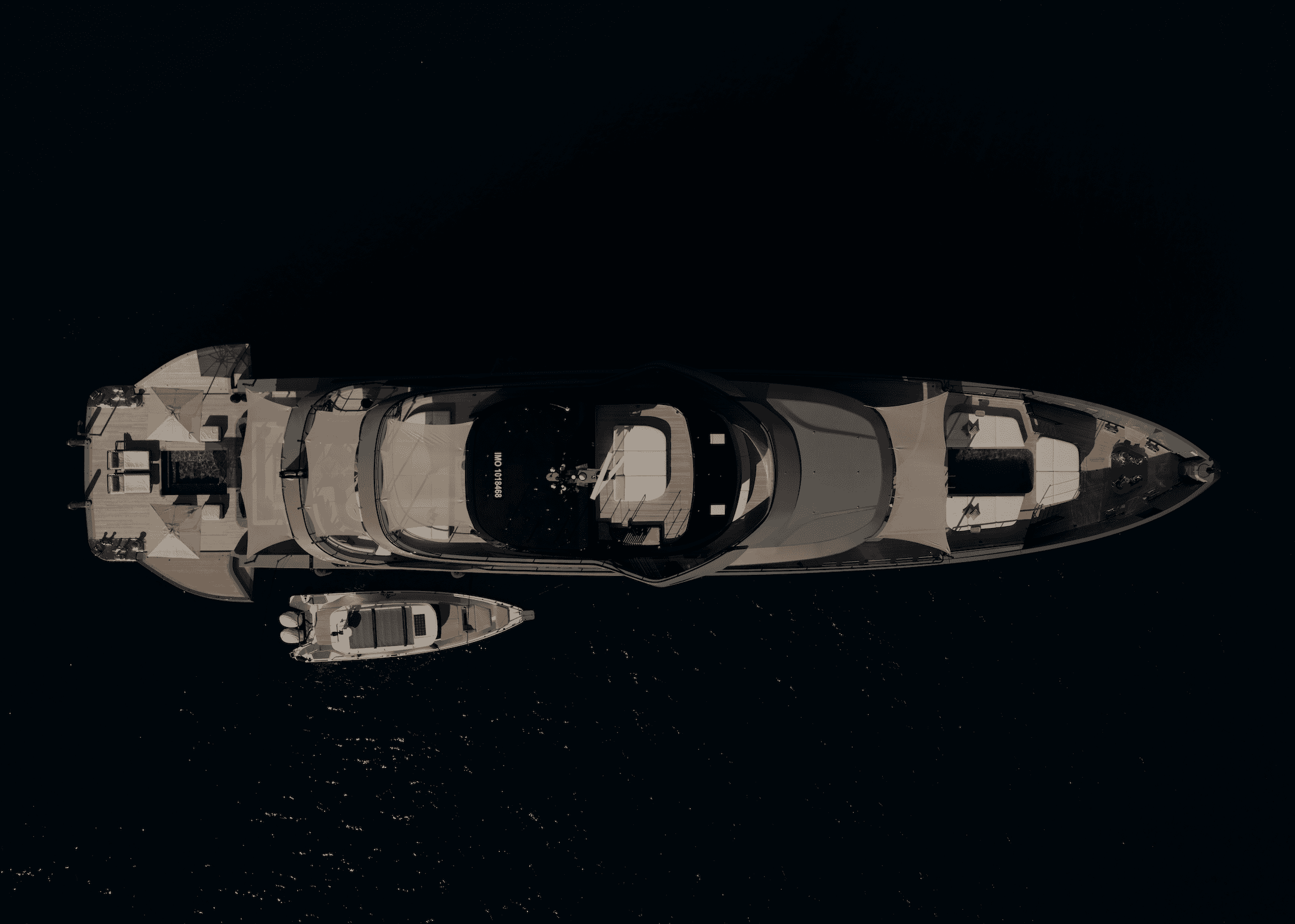
HEED Finally Revealed at the Monaco Yacht Show
After three episodes in which the completed yacht's appearance had been deliberately concealed, the fourth instalment finally introduced HEED in full.
Her presentation around the 2026 Monaco Yacht Show revealed a 53-metre, all-aluminium Rossinavi with exterior design by Alberto Mancini Yacht Design, naval architecture by Arrabito Naval Architects and interiors by Achille Salvagni Architetti.
The yacht's metallic grey finish, low-profile superstructure and long horizontal lines give her a distinctive appearance without revealing the extent of the accommodation and facilities concealed within.
One of the principal design challenges was to maximise the available space while remaining below 500 gross tonnes.
The result includes two swimming pools, opening terraces, fold-down platforms and discreetly integrated anchoring equipment.
For viewers who had followed the delivery and construction episodes, the reveal provided the first opportunity to see how the owner's original requirements and the design team's technical solutions had come together in the finished vessel.
Inside HEED: A Private Owner's Deck and Sculptural Interior
The final episode devoted particular attention to the design choices that distinguish HEED from other yachts of a similar size.
The owner's suite occupies a forward-facing position on the upper deck, with extensive glazing and direct access to a private terrace featuring a swimming pool and sunbathing area.
A second pool is located at the aft beach club, where fold-down platforms create additional waterside space. Elsewhere, an opening balcony connects the main-deck dining room with the sea.
Inside, Achille Salvagni's design is characterised by sweeping curves, natural materials and sculptural furnishings that appear to form part of the surrounding architecture.
The interior uses contrasting woods, polished finishes and carefully controlled lighting to create a distinctive atmosphere, while full-height windows maintain a connection with the surroundings.
Four additional guest staterooms are located on the lower deck, and an elevator connects the yacht's different levels.
The arrangement reflects the owner's preference for privacy, comfort and generous spaces, achieved within the constraints of a 53-metre vessel.
What the Cameras Discovered Beyond the Finished Yacht
Although HEED's appearance was the principal attraction of the final episode, the programme also examined the technology and people responsible for making the yacht function.
The engineering team explained features including independently operated rudders, a ballast system and a battery installation capable of powering the yacht's hotel electrical load for up to six hours without running the generators.
This allows quieter periods at anchor, reducing noise and vibration while maintaining onboard services.
The cameras also returned to the crew and the wider SeaNet organisation, meeting the people responsible for hospitality, recruitment, operations, finance and business development.
Having visited several SeaNet yachts over the years, David described a recurring culture of care among their crews, an impression reinforced by the company's emphasis on recruitment, training and professional support.
The final episode therefore connected the visible luxury of HEED with the less obvious systems and responsibilities required to maintain the experience expected by her owners.
From a Four-Part Documentary to Wider Industry Recognition
The completion of the series coincided with growing attention around HEED and SeaNet's approach to yacht ownership and management.
The yacht's Monaco debut attracted coverage from specialist publications, while Forbes subsequently examined SeaNet's business model in an article published on 22 October 2026.
For SeaNet, HEED represents a significant development in that approach. The original owner chose to become the first co-owner of the new yacht, with further ownership interests offered through the company's programme.
For Yachts For Sale Blog, the four-part series provided an opportunity to document a superyacht project from an unusually broad perspective.
Beginning with the pressure of delivery day, moving through the financial and organisational decisions behind ownership, and examining the preparation required for a fully custom build, the series ultimately arrived at the finished yacht in Monaco.
HEED's reveal brought the story to its conclusion, but the significance of the project extends beyond the vessel herself. The series demonstrated how design, engineering, crew, management and ownership arrangements must work together to turn a custom-built superyacht into a successful long-term operation.