Yachts For Sale
Yacht for sale
Yachts For Sale
Content
Spirit of Venice: A Custom Sailing Yacht with a Story in Every Line
A Brief Built Around Family, Oceans and Classic Taste
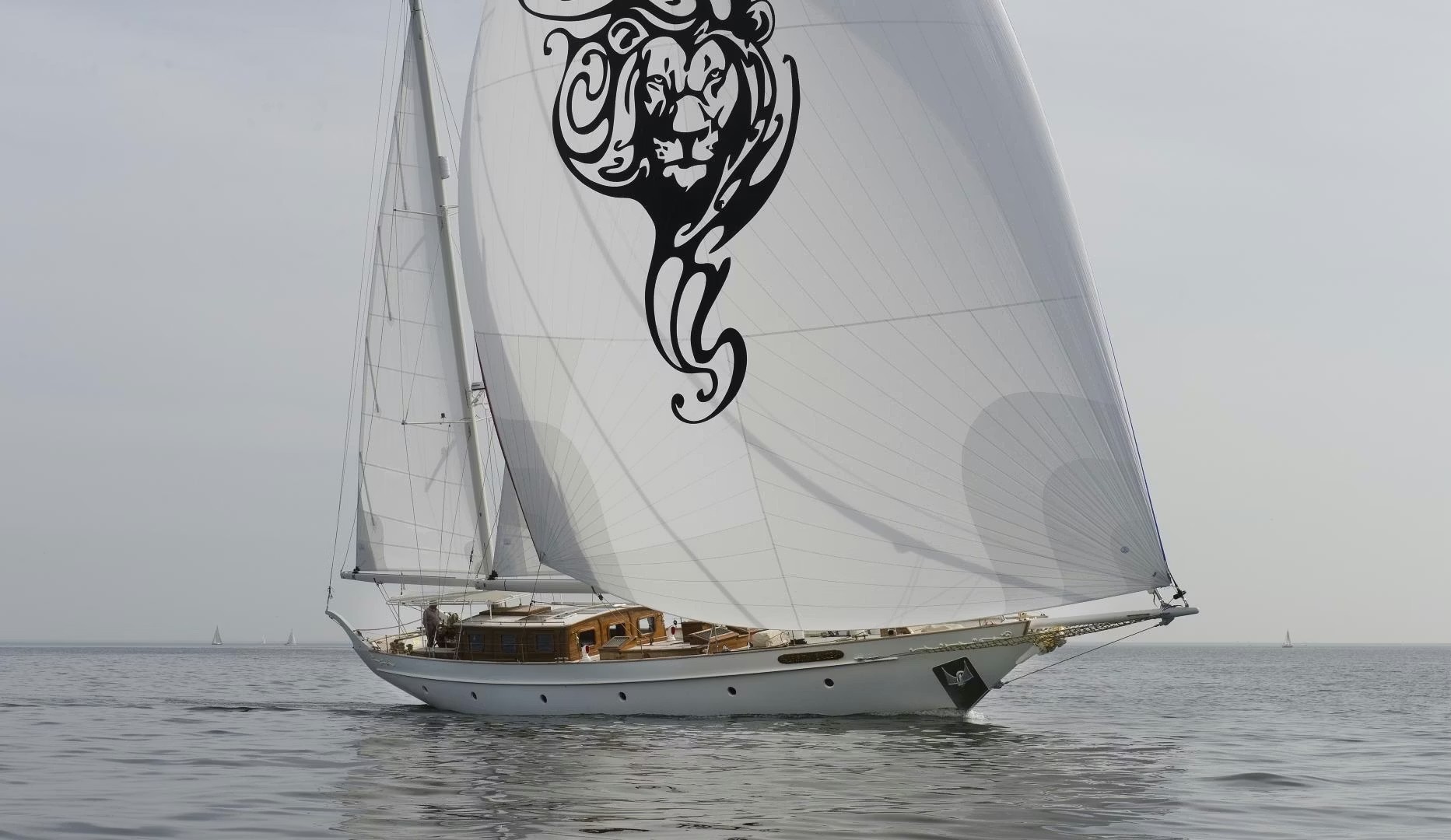
The owner’s brief was very clear from the beginning. He wanted a traditional, classic sailing yacht for circumnavigating with his family over a period of several years. The Pacific Ocean was very much in his mind, and that immediately shaped the direction of the project.
This was not to be a racing yacht. Nor was it intended to be one of those modern sailing yachts that gives you impressive numbers on paper but can feel lively, nervous, or uncomfortable at sea. The owner was already a very experienced sailor. He had spent time on many modern sailing yachts and knew what he liked, and perhaps more importantly, what he no longer wanted.
His ambition was to create something much more personal.
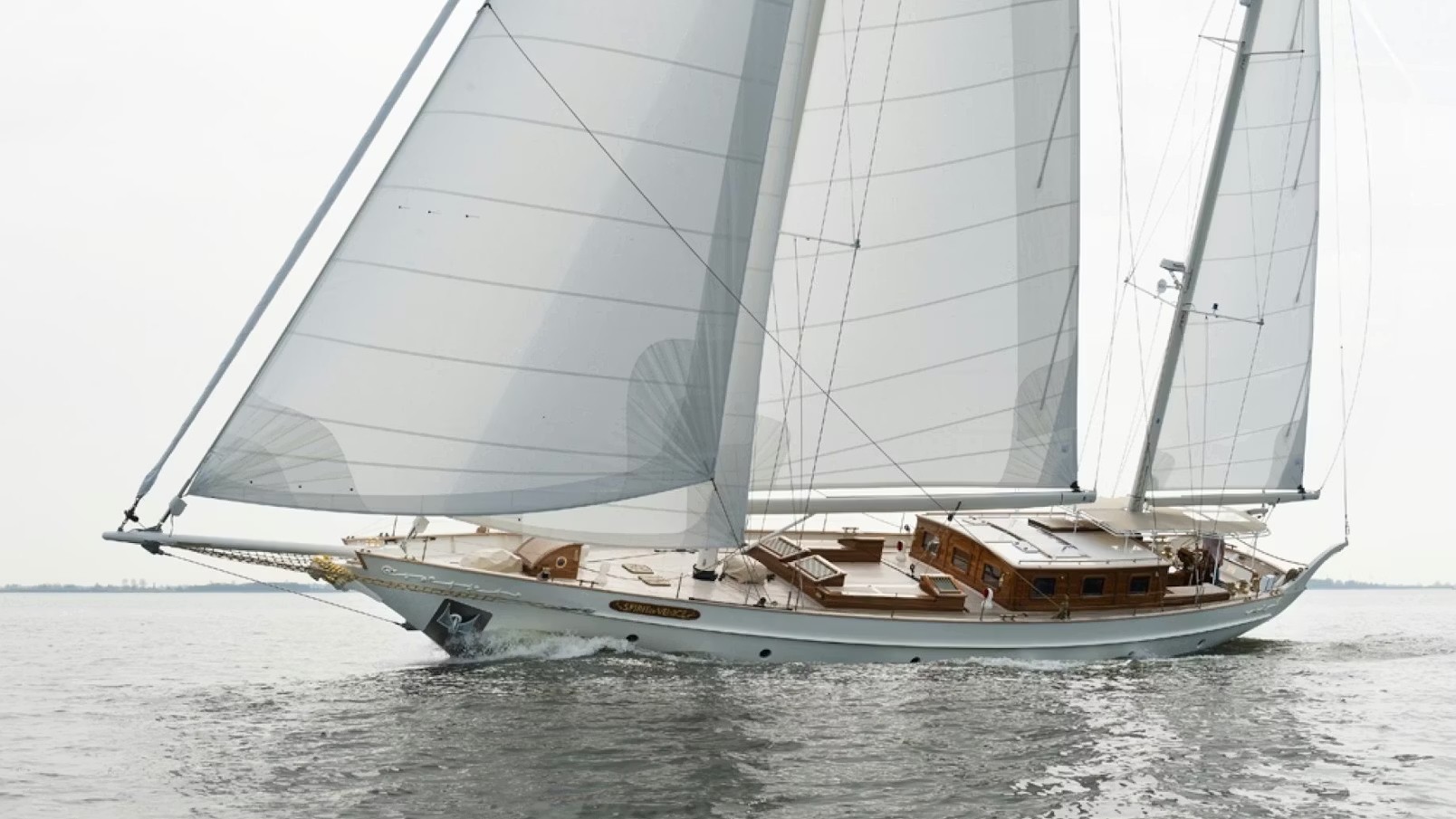
He wanted a yacht with his own aesthetic taste. Something classic in spirit, comfortable in motion, practical for long-distance cruising, and enjoyable for family life on board. Olivier describes her as a fast cruising yacht rather than a racing yacht, and that distinction is important. Spirit of Venice was designed to sail well, but always with comfort, handling, and seaworthiness at the centre of the design.
A Brief Built Around Family, Oceans and Classic Taste
The owner’s brief was very clear from the beginning. He wanted a traditional, classic sailing yacht for circumnavigating with his family over a period of several years. The Pacific Ocean was very much in his mind, and that immediately shaped the direction of the project.
This was not to be a racing yacht. Nor was it intended to be one of those modern sailing yachts that gives you impressive numbers on paper but can feel lively, nervous, or uncomfortable at sea. The owner was already a very experienced sailor. He had spent time on many modern sailing yachts and knew what he liked, and perhaps more importantly, what he no longer wanted.
His ambition was to create something much more personal.
He wanted a yacht with his own aesthetic taste. Something classic in spirit, comfortable in motion, practical for long-distance cruising, and enjoyable for family life on board. Olivier describes her as a fast cruising yacht rather than a racing yacht, and that distinction is important. Spirit of Venice was designed to sail well, but always with comfort, handling, and seaworthiness at the centre of the design.
A Brief Built Around Family, Oceans and Classic Taste
The owner’s brief was very clear from the beginning. He wanted a traditional, classic sailing yacht for circumnavigating with his family over a period of several years. The Pacific Ocean was very much in his mind, and that immediately shaped the direction of the project.
This was not to be a racing yacht. Nor was it intended to be one of those modern sailing yachts that gives you impressive numbers on paper but can feel lively, nervous, or uncomfortable at sea. The owner was already a very experienced sailor. He had spent time on many modern sailing yachts and knew what he liked, and perhaps more importantly, what he no longer wanted.
His ambition was to create something much more personal.
He wanted a yacht with his own aesthetic taste. Something classic in spirit, comfortable in motion, practical for long-distance cruising, and enjoyable for family life on board. Olivier describes her as a fast cruising yacht rather than a racing yacht, and that distinction is important. Spirit of Venice was designed to sail well, but always with comfort, handling, and seaworthiness at the centre of the design.
Choosing the Right Yard
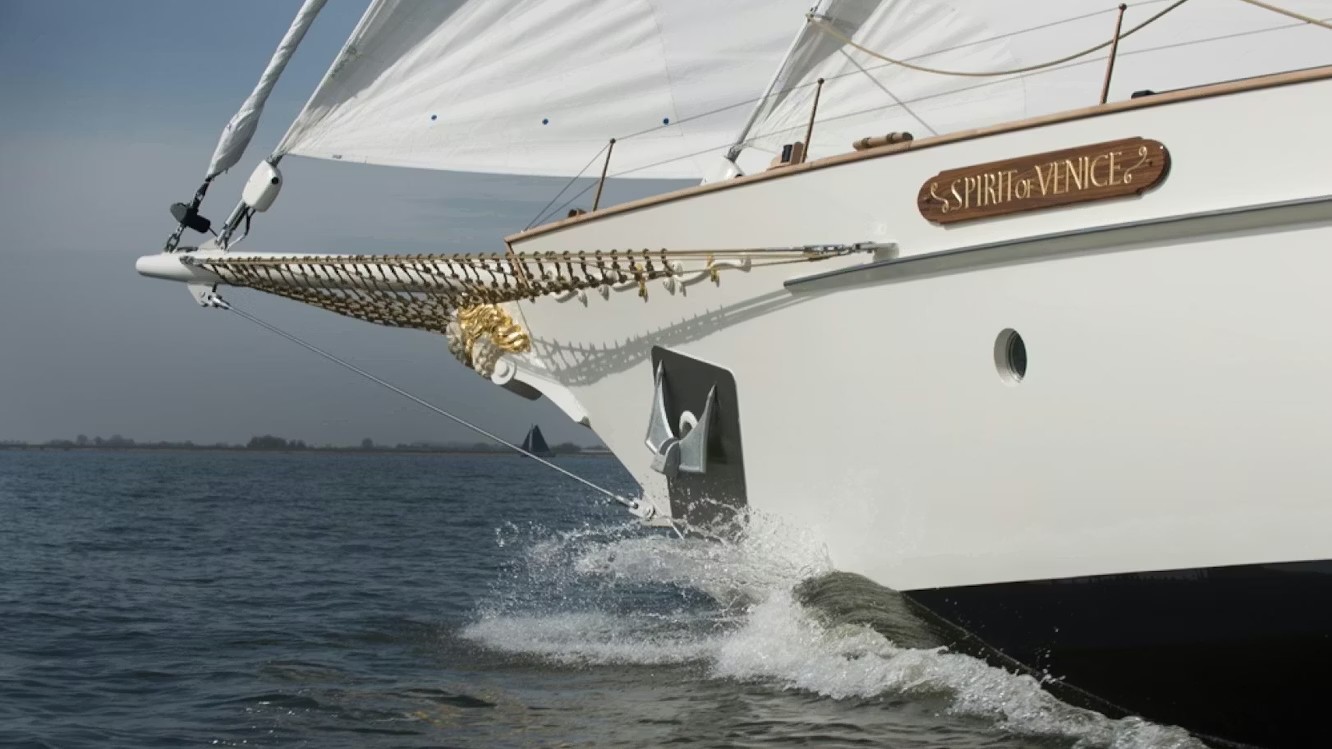
For the build, Olivier chose VMG Yachtbuilders in Holland, a yard located close to his own office. That proximity became a major advantage throughout the project.
The owner wanted Olivier to supervise the entire build, and because the yard was only around fifteen minutes away, he was able to visit almost every day. That meant he could stay closely connected to the details, monitor the work, and make sure the yacht being built remained faithful to the original vision.
Of course, Holland has several excellent yards capable of producing a yacht of this type, but VMG Yachtbuilders had the right combination of craftsmanship, custom build experience, and size-specific expertise. They were used to working on boats of this scale, and just as importantly, they were comfortable with the kind of detailed, bespoke approach that Spirit of Venice required.
For a yacht like this, those details matter. A custom sailing yacht is not simply a naval architecture exercise. It is a collaboration between owner, designer, yard and craftsmen. The better that relationship works, the better the finished yacht will be.
In this case, Olivier already knew the team well. He trusted the people, understood their capabilities, and knew that the required disciplines were available in-house. That trust is visible in the finished yacht.
Choosing the Right Yard
For the build, Olivier chose VMG Yachtbuilders in Holland, a yard located close to his own office. That proximity became a major advantage throughout the project.
The owner wanted Olivier to supervise the entire build, and because the yard was only around fifteen minutes away, he was able to visit almost every day. That meant he could stay closely connected to the details, monitor the work, and make sure the yacht being built remained faithful to the original vision.
Of course, Holland has several excellent yards capable of producing a yacht of this type, but VMG Yachtbuilders had the right combination of craftsmanship, custom build experience, and size-specific expertise. They were used to working on boats of this scale, and just as importantly, they were comfortable with the kind of detailed, bespoke approach that Spirit of Venice required.
For a yacht like this, those details matter. A custom sailing yacht is not simply a naval architecture exercise. It is a collaboration between owner, designer, yard and craftsmen. The better that relationship works, the better the finished yacht will be.
In this case, Olivier already knew the team well. He trusted the people, understood their capabilities, and knew that the required disciplines were available in-house. That trust is visible in the finished yacht.
Choosing the Right Yard
For the build, Olivier chose VMG Yachtbuilders in Holland, a yard located close to his own office. That proximity became a major advantage throughout the project.
The owner wanted Olivier to supervise the entire build, and because the yard was only around fifteen minutes away, he was able to visit almost every day. That meant he could stay closely connected to the details, monitor the work, and make sure the yacht being built remained faithful to the original vision.
Of course, Holland has several excellent yards capable of producing a yacht of this type, but VMG Yachtbuilders had the right combination of craftsmanship, custom build experience, and size-specific expertise. They were used to working on boats of this scale, and just as importantly, they were comfortable with the kind of detailed, bespoke approach that Spirit of Venice required.
For a yacht like this, those details matter. A custom sailing yacht is not simply a naval architecture exercise. It is a collaboration between owner, designer, yard and craftsmen. The better that relationship works, the better the finished yacht will be.
In this case, Olivier already knew the team well. He trusted the people, understood their capabilities, and knew that the required disciplines were available in-house. That trust is visible in the finished yacht.
From Drawing Board to Launch
The design phase took around six months. During that period the owner gave Olivier considerable freedom, but he was also very involved in the parts of the yacht that mattered most to him.
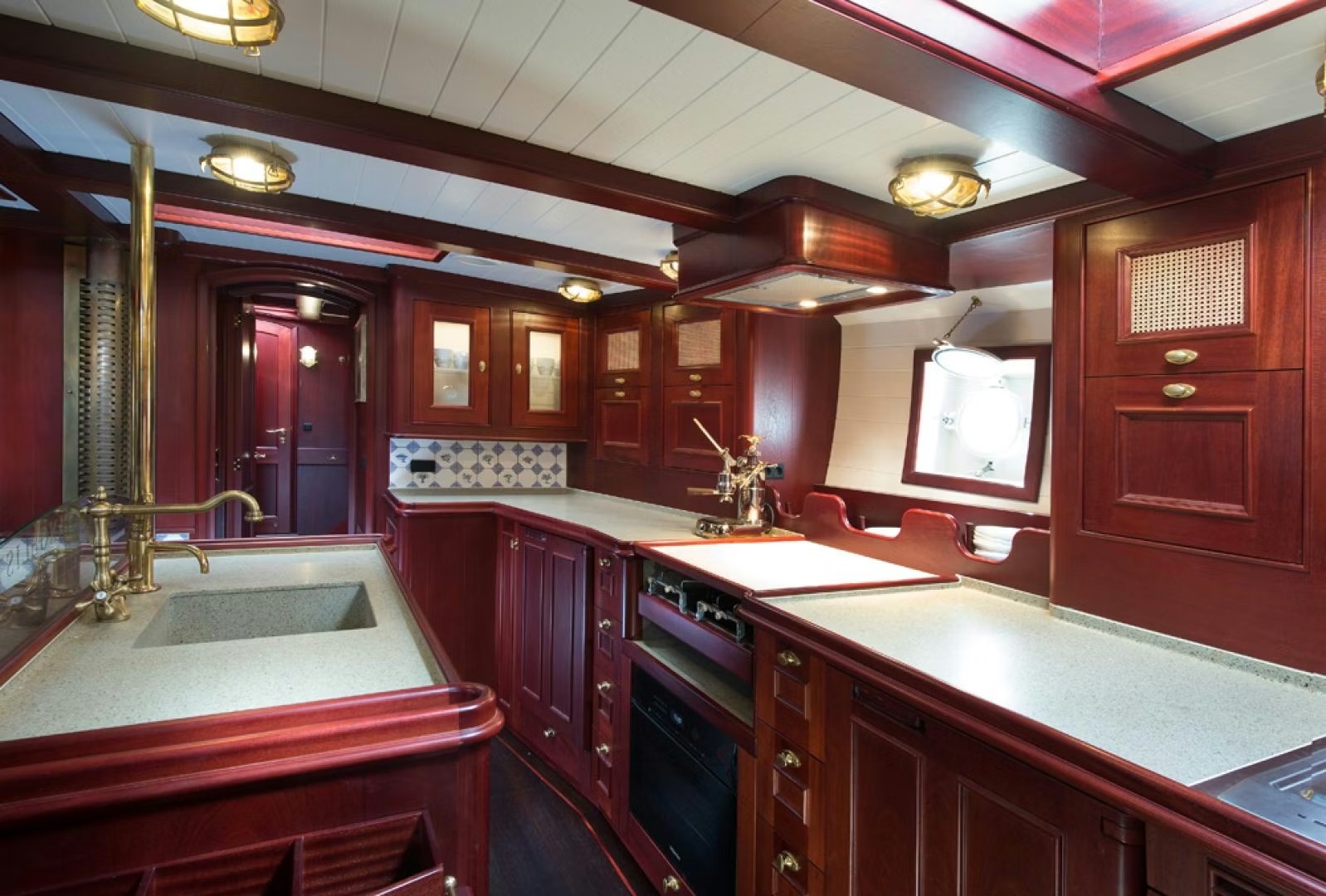
That included areas such as the galley and the owner’s cabin, where personal use and daily comfort would be especially important. Olivier describes that process as a lot of fun, which says something about the relationship between designer and owner. The best custom yachts often come from that kind of exchange, where the owner has strong ideas but also trusts the designer to interpret them properly.
Once the design was complete, construction took a little less than a year and a half before launch.
That is a remarkably focused timeline for a yacht with this level of individuality, but it also reflects the clarity of the project. The owner knew what he wanted, the designer understood the brief, and the yard had the right skills to bring it all together.
From Drawing Board to Launch
The design phase took around six months. During that period the owner gave Olivier considerable freedom, but he was also very involved in the parts of the yacht that mattered most to him.
That included areas such as the galley and the owner’s cabin, where personal use and daily comfort would be especially important. Olivier describes that process as a lot of fun, which says something about the relationship between designer and owner. The best custom yachts often come from that kind of exchange, where the owner has strong ideas but also trusts the designer to interpret them properly.
Once the design was complete, construction took a little less than a year and a half before launch.
That is a remarkably focused timeline for a yacht with this level of individuality, but it also reflects the clarity of the project. The owner knew what he wanted, the designer understood the brief, and the yard had the right skills to bring it all together.
From Drawing Board to Launch
The design phase took around six months. During that period the owner gave Olivier considerable freedom, but he was also very involved in the parts of the yacht that mattered most to him.
That included areas such as the galley and the owner’s cabin, where personal use and daily comfort would be especially important. Olivier describes that process as a lot of fun, which says something about the relationship between designer and owner. The best custom yachts often come from that kind of exchange, where the owner has strong ideas but also trusts the designer to interpret them properly.
Once the design was complete, construction took a little less than a year and a half before launch.
That is a remarkably focused timeline for a yacht with this level of individuality, but it also reflects the clarity of the project. The owner knew what he wanted, the designer understood the brief, and the yard had the right skills to bring it all together.
Aluminium Hull, Composite Deck
One of the key technical decisions was the combination of an aluminium hull with a composite deck structure.
The aluminium hull gave Spirit of Venice strength, durability, and relatively easy maintenance, while avoiding unnecessary weight. For a yacht intended for serious cruising, those are important qualities. You want a vessel that can look after her owner and family over long distances, but you do not want to create something unnecessarily heavy or sluggish.
The deck structure, cockpit, deck saloon, skylights and forward deck areas were built in composite. There were practical reasons for this. On aluminium yachts, many corrosion issues tend to occur on deck, especially around fittings and appendages. Spirit of Venice also has a great deal of classic woodwork on deck, and that integrates more naturally with a composite structure than it would with aluminium.
The result is a yacht that combines strength and lightness with the classic detailing the owner wanted. It is a very sensible technical solution, but also one that supports the yacht’s visual character.
Aluminium Hull, Composite Deck
One of the key technical decisions was the combination of an aluminium hull with a composite deck structure.
The aluminium hull gave Spirit of Venice strength, durability, and relatively easy maintenance, while avoiding unnecessary weight. For a yacht intended for serious cruising, those are important qualities. You want a vessel that can look after her owner and family over long distances, but you do not want to create something unnecessarily heavy or sluggish.
The deck structure, cockpit, deck saloon, skylights and forward deck areas were built in composite. There were practical reasons for this. On aluminium yachts, many corrosion issues tend to occur on deck, especially around fittings and appendages. Spirit of Venice also has a great deal of classic woodwork on deck, and that integrates more naturally with a composite structure than it would with aluminium.
The result is a yacht that combines strength and lightness with the classic detailing the owner wanted. It is a very sensible technical solution, but also one that supports the yacht’s visual character.
Aluminium Hull, Composite Deck
One of the key technical decisions was the combination of an aluminium hull with a composite deck structure.
The aluminium hull gave Spirit of Venice strength, durability, and relatively easy maintenance, while avoiding unnecessary weight. For a yacht intended for serious cruising, those are important qualities. You want a vessel that can look after her owner and family over long distances, but you do not want to create something unnecessarily heavy or sluggish.
The deck structure, cockpit, deck saloon, skylights and forward deck areas were built in composite. There were practical reasons for this. On aluminium yachts, many corrosion issues tend to occur on deck, especially around fittings and appendages. Spirit of Venice also has a great deal of classic woodwork on deck, and that integrates more naturally with a composite structure than it would with aluminium.
The result is a yacht that combines strength and lightness with the classic detailing the owner wanted. It is a very sensible technical solution, but also one that supports the yacht’s visual character.
Classic Above the Water, Clever Below It
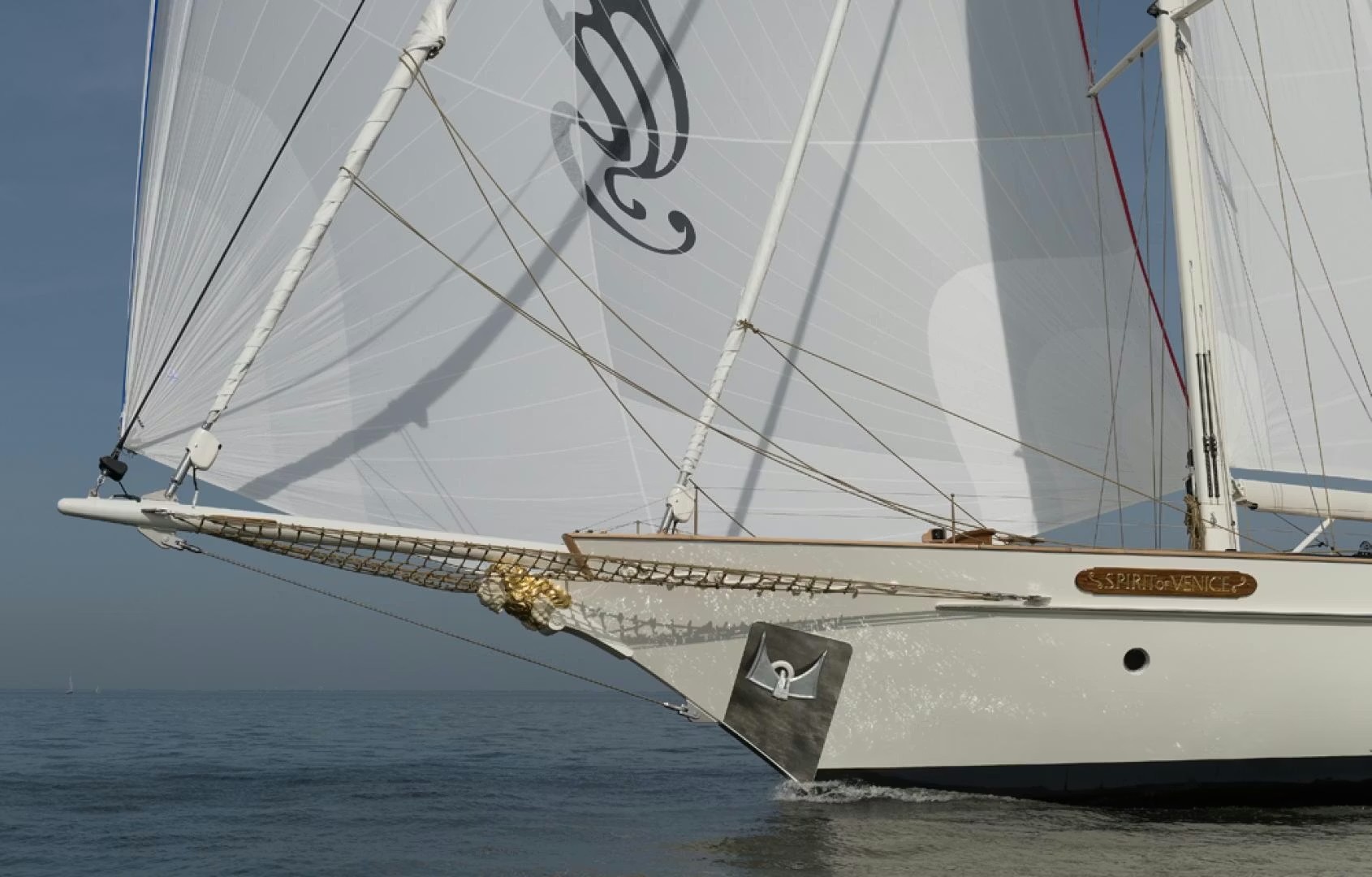
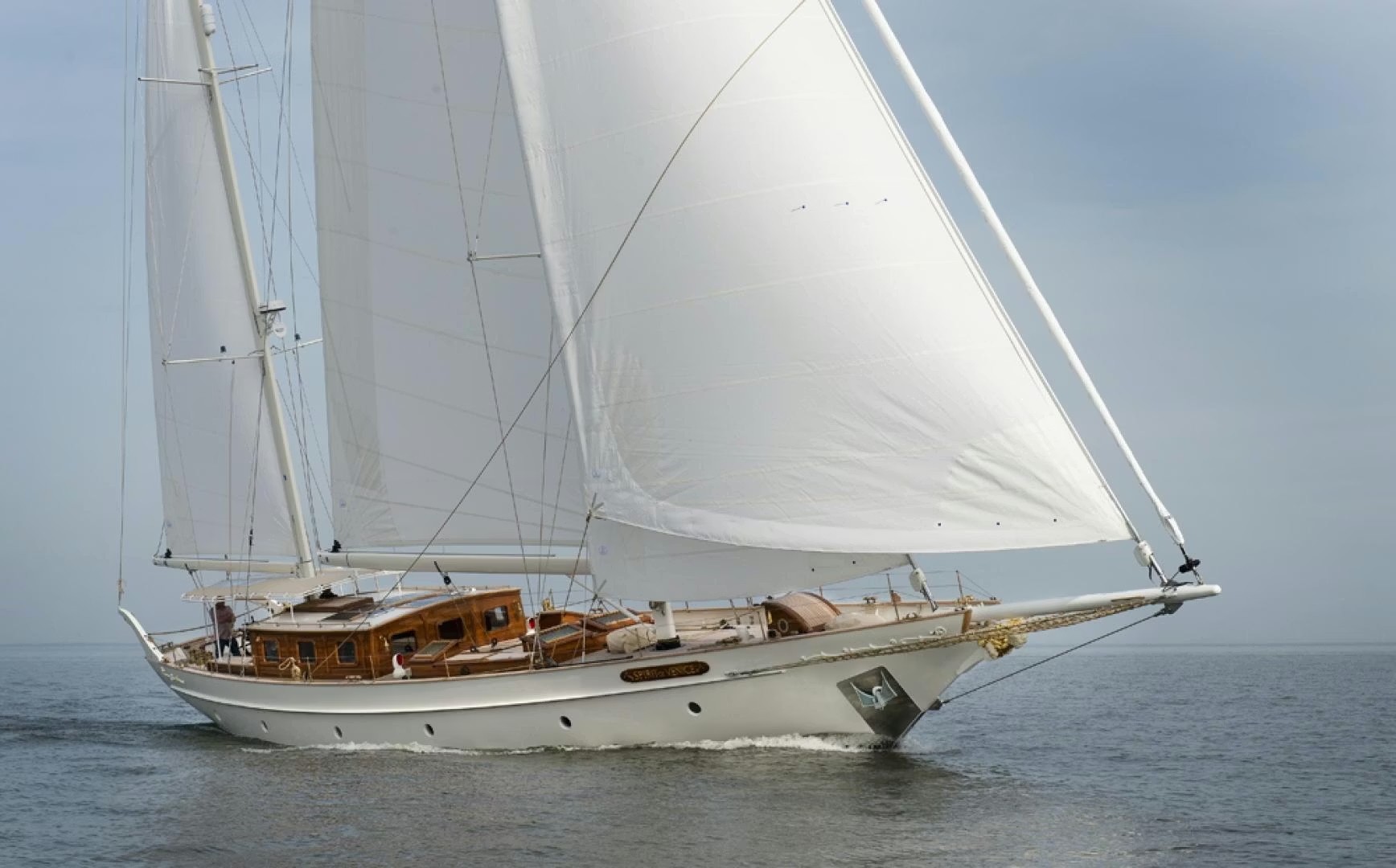
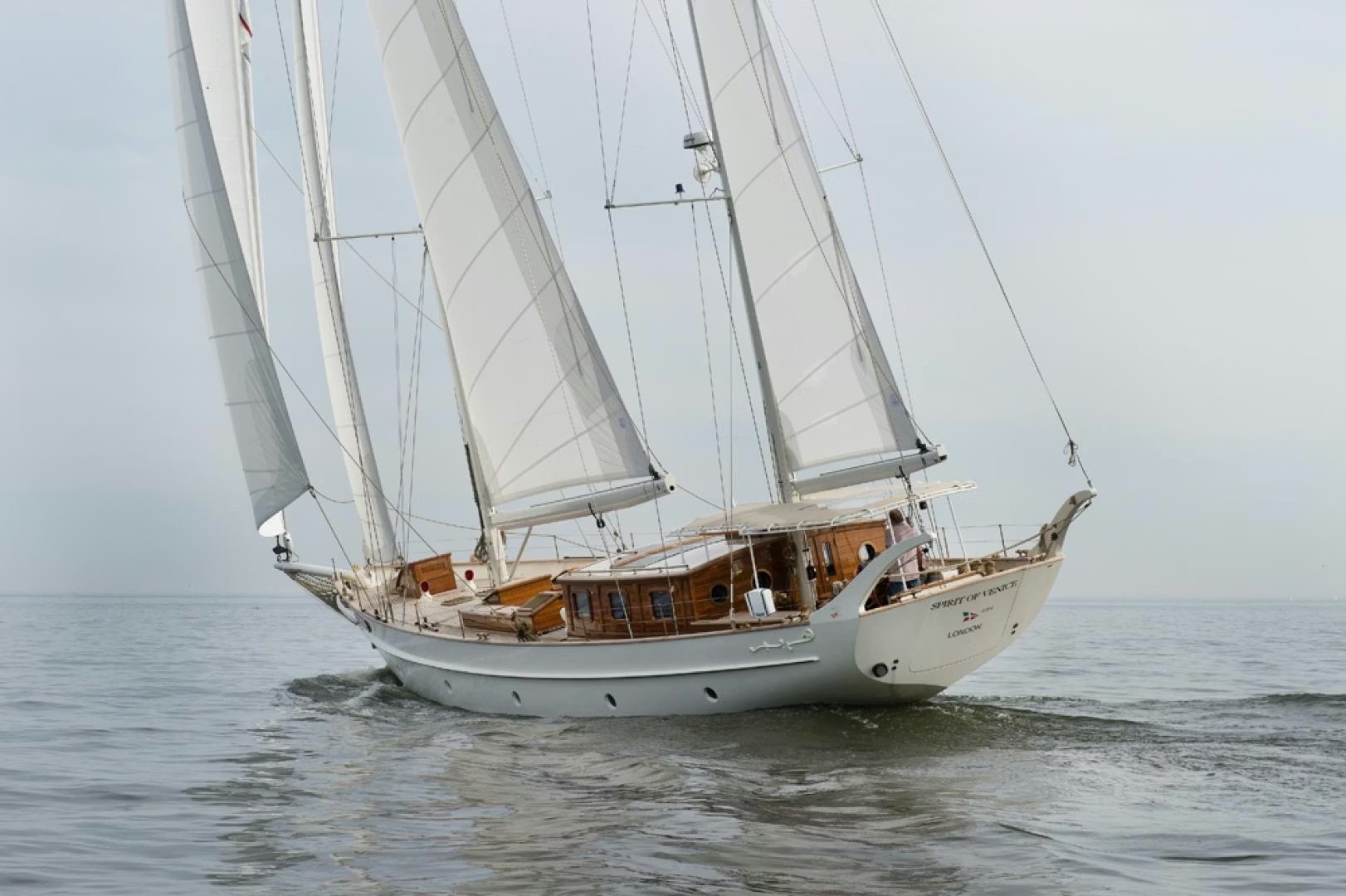
At first glance, Spirit of Venice has the romance and silhouette of a traditional sailing yacht. But beneath the waterline, she is much more sophisticated than her classic appearance might suggest.
Olivier designed her with an efficient underwater hull, a centreboard system, and a balanced rudder. These are not decorative features. They are the reason the yacht performs so well across different wind directions and wind strengths.
She was never intended to carry an extreme rig. The sailing plan is moderate, which means the yacht can be handled by a crew of two without requiring excessive force or effort. That is completely in keeping with the original brief. The idea was not to create a yacht that needed a large crew and constant physical input, but one that could sail efficiently, comfortably, and safely.
Olivier describes her as performing very well even in light weather, despite not having an extreme sail plan. That is one of the real signs of good design. She does not rely on brute force or oversized rigging to deliver satisfying sailing. Her hull, foils and balance do the work.
Classic Above the Water, Clever Below It
At first glance, Spirit of Venice has the romance and silhouette of a traditional sailing yacht. But beneath the waterline, she is much more sophisticated than her classic appearance might suggest.
Olivier designed her with an efficient underwater hull, a centreboard system, and a balanced rudder. These are not decorative features. They are the reason the yacht performs so well across different wind directions and wind strengths.
She was never intended to carry an extreme rig. The sailing plan is moderate, which means the yacht can be handled by a crew of two without requiring excessive force or effort. That is completely in keeping with the original brief. The idea was not to create a yacht that needed a large crew and constant physical input, but one that could sail efficiently, comfortably, and safely.
Olivier describes her as performing very well even in light weather, despite not having an extreme sail plan. That is one of the real signs of good design. She does not rely on brute force or oversized rigging to deliver satisfying sailing. Her hull, foils and balance do the work.
Classic Above the Water, Clever Below It
At first glance, Spirit of Venice has the romance and silhouette of a traditional sailing yacht. But beneath the waterline, she is much more sophisticated than her classic appearance might suggest.
Olivier designed her with an efficient underwater hull, a centreboard system, and a balanced rudder. These are not decorative features. They are the reason the yacht performs so well across different wind directions and wind strengths.
She was never intended to carry an extreme rig. The sailing plan is moderate, which means the yacht can be handled by a crew of two without requiring excessive force or effort. That is completely in keeping with the original brief. The idea was not to create a yacht that needed a large crew and constant physical input, but one that could sail efficiently, comfortably, and safely.
Olivier describes her as performing very well even in light weather, despite not having an extreme sail plan. That is one of the real signs of good design. She does not rely on brute force or oversized rigging to deliver satisfying sailing. Her hull, foils and balance do the work.
Comfort in Rough Weather
Comfort in Rough Weather
Comfort in Rough Weather
A Layout for Real Cruising
The interior and deck arrangement were designed around the way the yacht would actually be used.
Forward, there is a generous forepeak storage area with a proper seaworthy entrance rather than just a basic deck hatch. That space contains the anchor chain and provides substantial storage for rigging, lines, ropes, diving equipment and all the practical gear that a long-distance cruising yacht needs.
From there, a watertight bulkhead and watertight door lead aft into the accommodation area serving the guest cabins. There are guest cabins to port and starboard, supported by a shared sanitary space.
Moving further aft, another watertight bulkhead leads into the saloon, and this is where the personality of the yacht becomes especially clear.
The Galley as the Heart of the Yacht
The owner enjoys cooking and has very good taste, so the galley was not treated as an afterthought. It became one of the most important areas on board.
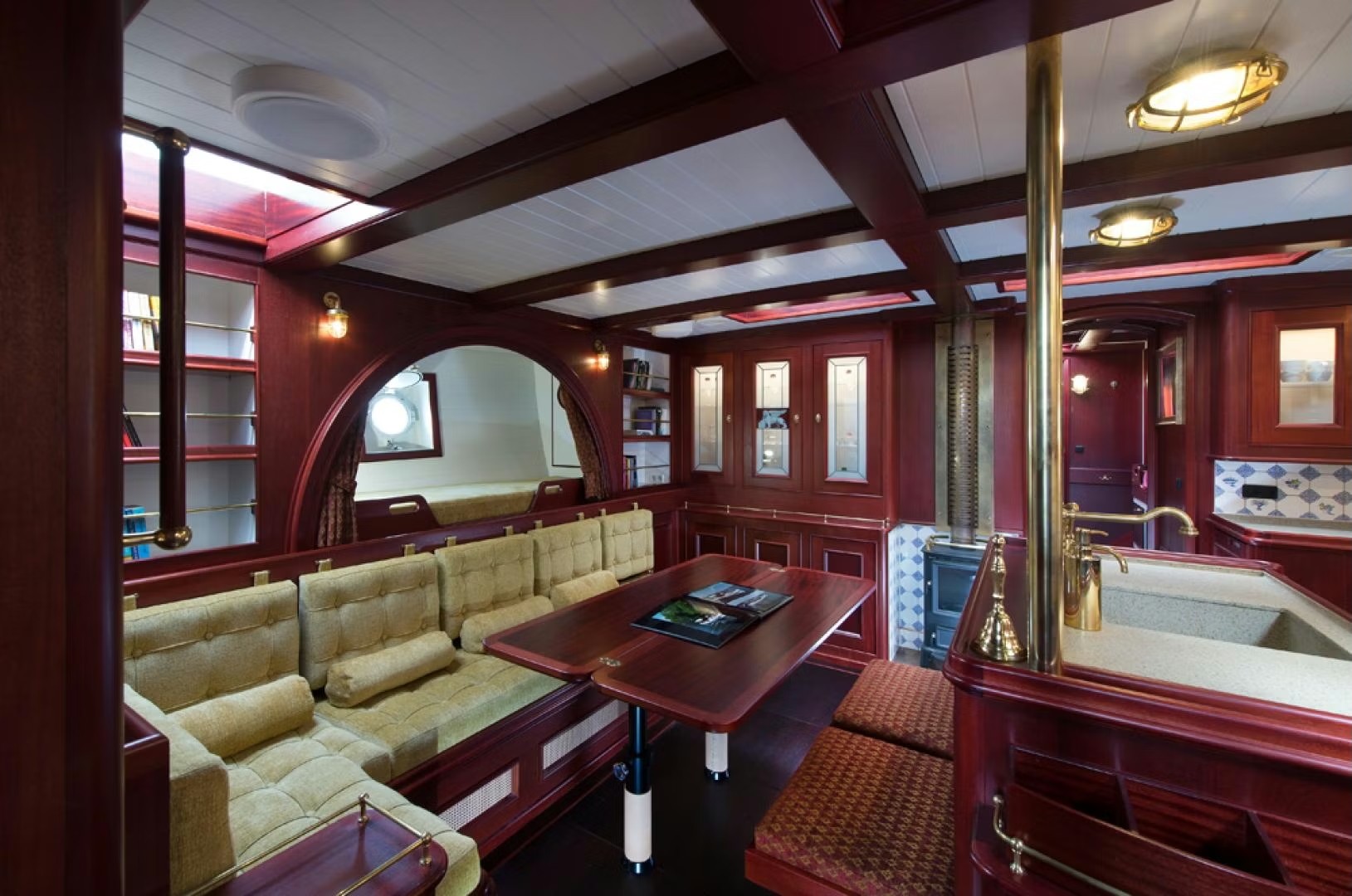
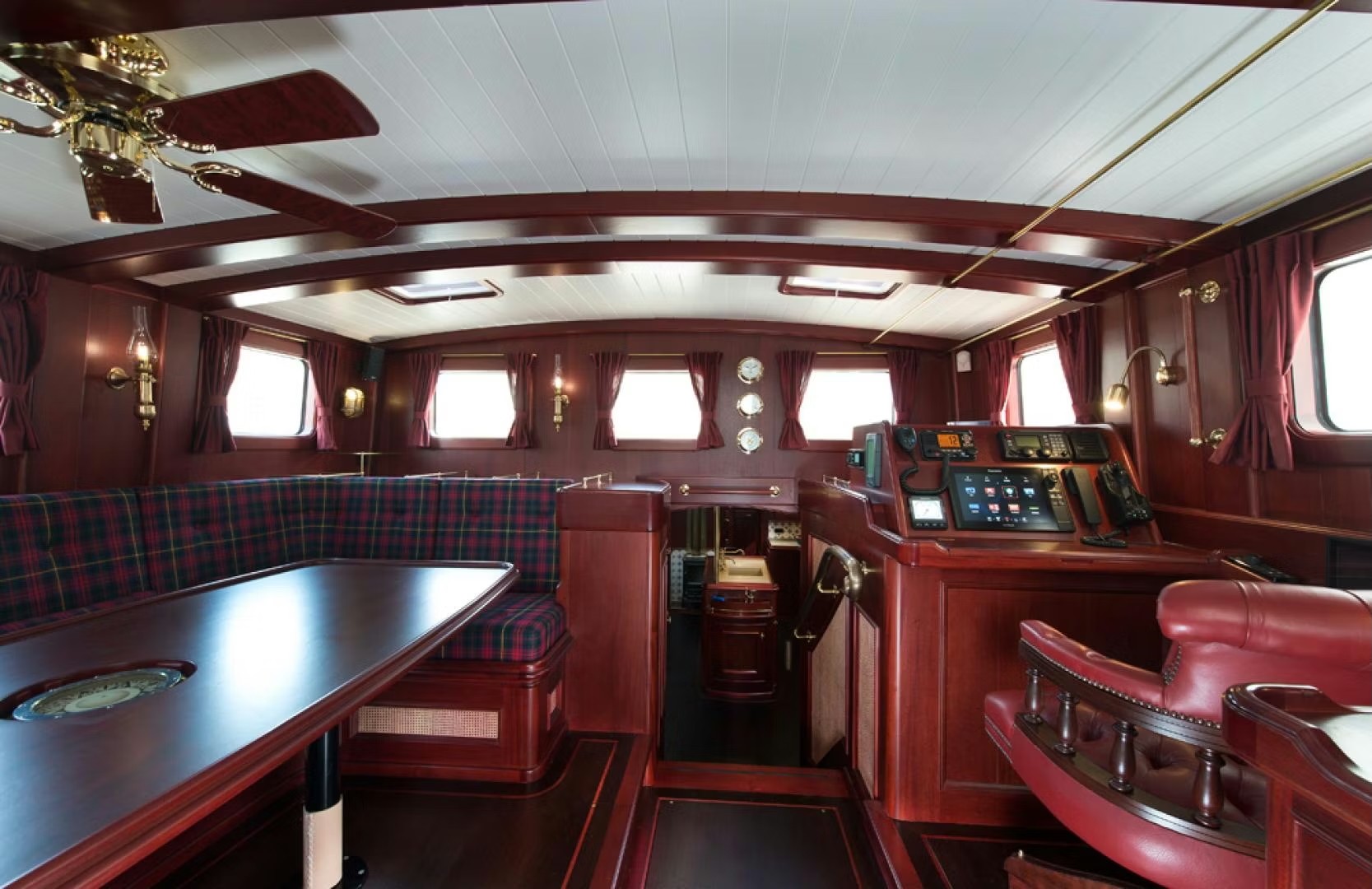
Olivier describes the galley as the heart of the boat, and it was designed accordingly. It is unusually generous for a yacht of this size, with a small bar, a teppanyaki area, and everything required to prepare proper meals on board.
Opposite the galley is a lounge area, positioned in a way that keeps people connected to the cooking and dining experience. This is not a yacht where the galley is hidden away from life on board. It is part of the social atmosphere.
There is also a pilot berth behind the lounge, which Olivier notes is especially popular with children or with those who like to stay up late. It is a small detail, but it says a lot about how the yacht was conceived. This is not just an elegant object. It is a family cruising yacht designed around real life.
A Layout for Real Cruising
The interior and deck arrangement were designed around the way the yacht would actually be used.
Forward, there is a generous forepeak storage area with a proper seaworthy entrance rather than just a basic deck hatch. That space contains the anchor chain and provides substantial storage for rigging, lines, ropes, diving equipment and all the practical gear that a long-distance cruising yacht needs.
From there, a watertight bulkhead and watertight door lead aft into the accommodation area serving the guest cabins. There are guest cabins to port and starboard, supported by a shared sanitary space.
Moving further aft, another watertight bulkhead leads into the saloon, and this is where the personality of the yacht becomes especially clear.
The Galley as the Heart of the Yacht
The owner enjoys cooking and has very good taste, so the galley was not treated as an afterthought. It became one of the most important areas on board.
Olivier describes the galley as the heart of the boat, and it was designed accordingly. It is unusually generous for a yacht of this size, with a small bar, a teppanyaki area, and everything required to prepare proper meals on board.
Opposite the galley is a lounge area, positioned in a way that keeps people connected to the cooking and dining experience. This is not a yacht where the galley is hidden away from life on board. It is part of the social atmosphere.
There is also a pilot berth behind the lounge, which Olivier notes is especially popular with children or with those who like to stay up late. It is a small detail, but it says a lot about how the yacht was conceived. This is not just an elegant object. It is a family cruising yacht designed around real life.
A Layout for Real Cruising
The interior and deck arrangement were designed around the way the yacht would actually be used.
Forward, there is a generous forepeak storage area with a proper seaworthy entrance rather than just a basic deck hatch. That space contains the anchor chain and provides substantial storage for rigging, lines, ropes, diving equipment and all the practical gear that a long-distance cruising yacht needs.
From there, a watertight bulkhead and watertight door lead aft into the accommodation area serving the guest cabins. There are guest cabins to port and starboard, supported by a shared sanitary space.
Moving further aft, another watertight bulkhead leads into the saloon, and this is where the personality of the yacht becomes especially clear.
The Galley as the Heart of the Yacht
The owner enjoys cooking and has very good taste, so the galley was not treated as an afterthought. It became one of the most important areas on board.
Olivier describes the galley as the heart of the boat, and it was designed accordingly. It is unusually generous for a yacht of this size, with a small bar, a teppanyaki area, and everything required to prepare proper meals on board.
Opposite the galley is a lounge area, positioned in a way that keeps people connected to the cooking and dining experience. This is not a yacht where the galley is hidden away from life on board. It is part of the social atmosphere.
There is also a pilot berth behind the lounge, which Olivier notes is especially popular with children or with those who like to stay up late. It is a small detail, but it says a lot about how the yacht was conceived. This is not just an elegant object. It is a family cruising yacht designed around real life.
The Owner’s Area and Deck Saloon
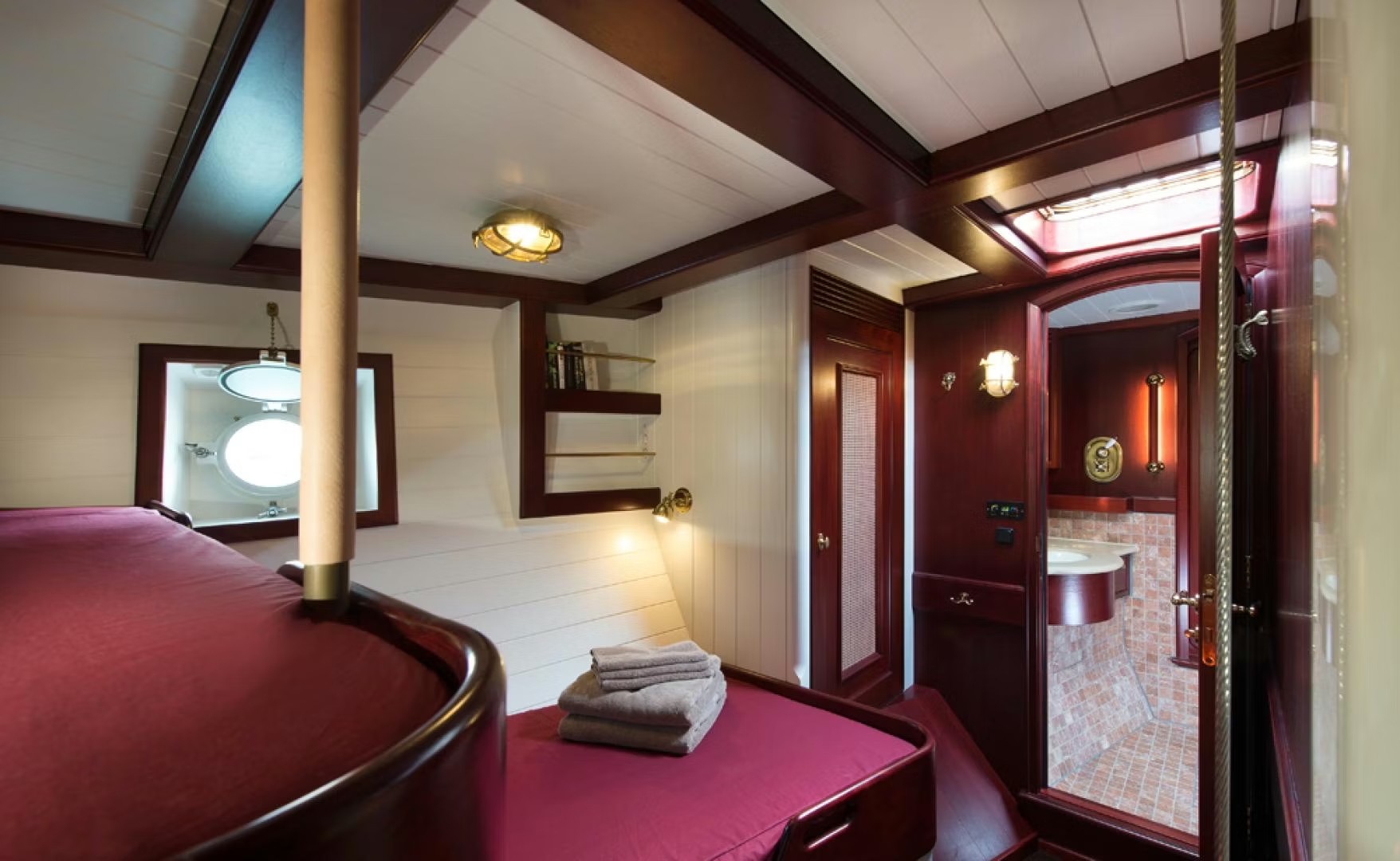
Further aft is the owner’s cabin, positioned to port, with a large double berth. Opposite is the owner’s bathroom, complete with a classic bath and shower arrangement.
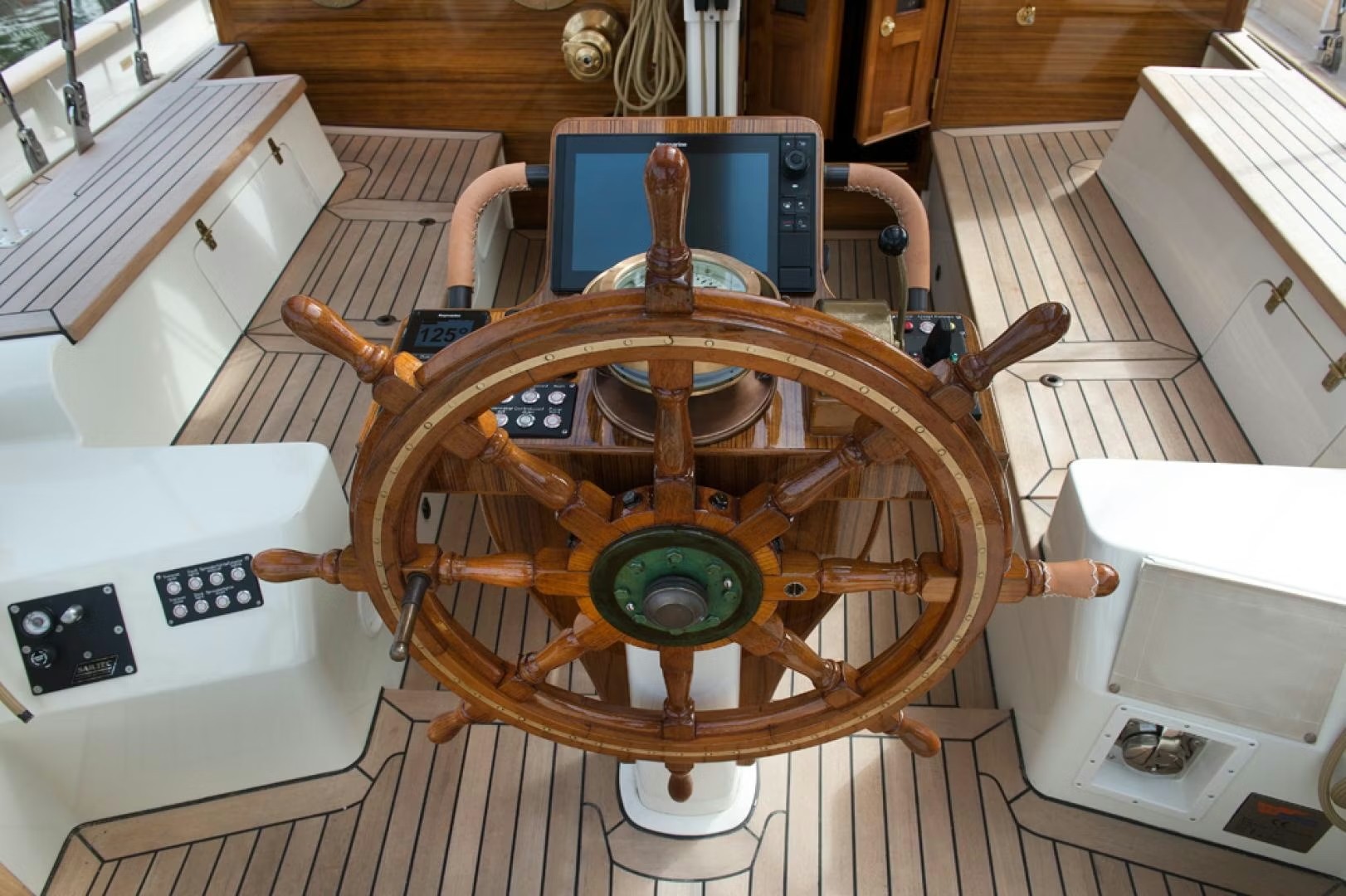
From there, the layout leads up to the deck saloon, one of the most appealing spaces on board. It offers a generous seating area and, opposite, a proper navigation station where the person on watch can sit comfortably with everything close at hand.
The deck saloon then connects beautifully with the cockpit. This relationship between interior and exterior space is one of the yacht’s strongest features. You can move naturally between the protected deck saloon and the open cockpit, creating one large social and practical area.
The cockpit itself is spacious, with a dining table, generous seating, and excellent protection. Beneath it is another large storage area for tools, repair equipment and other cruising essentials. The engine room is positioned beneath the deck saloon, and aft there is a stern hatch that functions as a swimming platform and boarding area when the yacht is at anchor.
On deck, the arrangement remains open and practical. There is a sunbed area amidships and plenty of uncluttered space to move around, sit, and enjoy the yacht.
The Owner’s Area and Deck Saloon
Further aft is the owner’s cabin, positioned to port, with a large double berth. Opposite is the owner’s bathroom, complete with a classic bath and shower arrangement.
From there, the layout leads up to the deck saloon, one of the most appealing spaces on board. It offers a generous seating area and, opposite, a proper navigation station where the person on watch can sit comfortably with everything close at hand.
The deck saloon then connects beautifully with the cockpit. This relationship between interior and exterior space is one of the yacht’s strongest features. You can move naturally between the protected deck saloon and the open cockpit, creating one large social and practical area.
The cockpit itself is spacious, with a dining table, generous seating, and excellent protection. Beneath it is another large storage area for tools, repair equipment and other cruising essentials. The engine room is positioned beneath the deck saloon, and aft there is a stern hatch that functions as a swimming platform and boarding area when the yacht is at anchor.
On deck, the arrangement remains open and practical. There is a sunbed area amidships and plenty of uncluttered space to move around, sit, and enjoy the yacht.
The Owner’s Area and Deck Saloon
Further aft is the owner’s cabin, positioned to port, with a large double berth. Opposite is the owner’s bathroom, complete with a classic bath and shower arrangement.
From there, the layout leads up to the deck saloon, one of the most appealing spaces on board. It offers a generous seating area and, opposite, a proper navigation station where the person on watch can sit comfortably with everything close at hand.
The deck saloon then connects beautifully with the cockpit. This relationship between interior and exterior space is one of the yacht’s strongest features. You can move naturally between the protected deck saloon and the open cockpit, creating one large social and practical area.
The cockpit itself is spacious, with a dining table, generous seating, and excellent protection. Beneath it is another large storage area for tools, repair equipment and other cruising essentials. The engine room is positioned beneath the deck saloon, and aft there is a stern hatch that functions as a swimming platform and boarding area when the yacht is at anchor.
On deck, the arrangement remains open and practical. There is a sunbed area amidships and plenty of uncluttered space to move around, sit, and enjoy the yacht.
The Centreboard Advantage
The Centreboard Advantage
The Centreboard Advantage
A Yacht the Whole Family Can Enjoy
A Yacht the Whole Family Can Enjoy
A Yacht the Whole Family Can Enjoy